


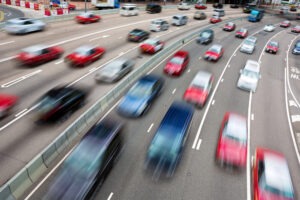
A freeway is a divided, controlled-access highway designed to move traffic without ordinary intersections, traffic signals, or direct access from neighboring properties. Drivers typically enter and exit through designated ramps, while overpasses and underpasses separate intersecting roads.
Because freeway collisions can involve high speeds, multiple vehicles, and disputed fault, determining the cause of a crash may require a close review of the available evidence. If you were injured in a freeway accident, a West Hollywood car accident lawyer can explain your rights and the options available under California law.
How Is a Freeway Defined in California?
In California, the definition of a freeway centers on access control. Caltrans defines a freeway for engineering purposes as a divided arterial highway with full control of access and grade-separated intersections. California’s statutory definition also focuses on limiting or restricting access from adjoining properties.
A useful way to tell whether it’s a freeway is to look at how vehicles enter and exit it. Unlike a local street or conventional highway, a freeway generally does not allow drivers to turn directly from the main travel lanes into homes, businesses, driveways, or ordinary cross streets.
Common freeway features include:
- Multiple travel lanes in each direction.
- Entrance and exit ramps.
- Medians or barriers separating opposing traffic.
- Overpasses and underpasses at intersecting roads.
- Limited access between the freeway and surrounding properties.
- Shoulders that may provide space for disabled vehicles and emergency use.
What Is the Difference Between a Freeway and a Highway?
The main difference between a freeway and a highway is access. A highway is a broad term for a public roadway used for travel or transportation. A freeway is a particular type of highway built with full access control.
That means all freeways are highways, but not every highway is a freeway. A conventional highway may have traffic signals, intersections, driveways, businesses, or other direct access points along the roadway.
The distinction can also affect how collisions occur. On a conventional highway, crashes may involve vehicles crossing an intersection or turning into nearby properties. Freeway accidents are more likely to involve merging, lane changes, sudden braking, rear-end collisions, or multiple vehicles traveling in the same direction.
Is a Freeway the Same as an Interstate or Expressway?
Not exactly. An Interstate is part of the federal Interstate Highway System. Interstate design standards generally require full access control, so Interstate routes commonly function as freeways.
An expressway is defined differently in Caltrans engineering terminology. An expressway has at least partial access control and may or may not be divided or use grade-separated intersections. A freeway, by comparison, has full access control and grade separation at intersections.
The word “freeway” also does not necessarily mean that every lane is free to use. The term describes the road’s controlled-access design rather than whether a driver may encounter a toll or managed express lane.
Why Can Freeway Accidents Be So Serious?
Freeway travel often occurs at higher speeds than travel on local streets. When vehicles collide at those speeds, occupants can be exposed to greater impact forces, and nearby drivers may have little time to avoid the initial crash.
Several characteristics of freeway traffic can contribute to severe collisions:
- High travel speeds can increase the force of a collision.
- Dense traffic can involve several vehicles in one crash.
- Merging vehicles can create conflicts near entrance and exit ramps.
- Sudden lane changes can lead to sideswipe or loss-of-control crashes.
- Large commercial trucks may be traveling alongside smaller passenger vehicles.
- An initial collision can lead to secondary crashes when approaching drivers cannot stop or change lanes safely.
What Types of Freeway Accidents Are Common?
Freeway traffic patterns can lead to several types of collisions. Some occur in stop-and-go congestion, while others happen when a driver merges, changes lanes, or loses control while traveling at freeway speed.
Common freeway accident types include:
- Rear-end collisions during sudden slowdowns or heavy traffic.
- Sideswipe accidents during unsafe lane changes.
- Merging collisions near entrance ramps.
- Multi-vehicle crashes involving several lanes of traffic.
- Rollover accidents following a high-speed impact or loss of control.
- Truck accidents involving commercial vehicles.
- Collisions caused by wrong-way or impaired drivers.
- Crashes involving stalled vehicles or roadway debris.
The type of collision can affect the evidence needed to establish how the accident happened and who may be responsible.
Have you been involved
in an accident?
 (310) 526-8383
What Should You Do After a Freeway Crash in California?
Your immediate concern after a freeway collision should be to get yourself and others away from further danger, when you can do so safely. Freeway traffic can continue moving around a crash scene, so do not enter a live traffic lane simply to inspect damage or take photographs.
Depending on the circumstances, you should consider taking the following steps:
- Call 911 if anyone is injured or the crash is creating a roadway hazard.
- Move to a safer location when it is possible and safe to do so.
- Get medical attention for injuries or symptoms.
- Exchange contact, driver’s license, vehicle, and insurance information with the other driver.
- Photograph the vehicles, damage, roadway, debris, and surrounding area when it is safe.
- Obtain contact information from witnesses.
- Notify your automobile insurer of the crash.
- Keep medical bills, repair estimates, wage records, and other accident-related documents.
California also requires an SR-1 traffic accident report to be submitted to the Department of Motor Vehicles within 10 days if someone is injured or killed, or if property damage exceeds $1,000. The SR-1 requirement is separate from reports made to law enforcement or an insurance company.
Can You Recover Compensation After a Freeway Collision?
If another person or entity caused your injuries, you may be able to seek compensation through an insurance claim or personal injury case. The damages available depend on the facts of the accident, the injuries you sustained, and the losses connected to those injuries.
Compensation may include:
- Medical expenses.
- Future medical care related to your injuries.
- Lost income.
- Reduced future earning ability when supported by the evidence.
- Vehicle repair or replacement costs.
- Other accident-related financial losses.
- Pain, suffering, and other qualifying non-economic damages.
A freeway crash may involve more than one responsible party, especially in a multi-vehicle collision. Reviewing the physical evidence, driver conduct, insurance coverage, and other available records can help establish how responsibility should be allocated.
Talk to a West Hollywood Car Accident Lawyer About Your Freeway Accident
At Omega Law Group Accident & Injury Attorneys, we help injured clients address insurance claims, disputed fault, and other legal issues that can arise after a serious collision.
With more than 20 experienced personal injury attorneys, our firm has the resources to investigate serious crashes while still giving each client individualized attention. We work on a contingency fee basis, are available 24/7 to take calls from prospective clients, and can provide assistance in Spanish.
Contact Omega Law Group to schedule a free consultation.
