


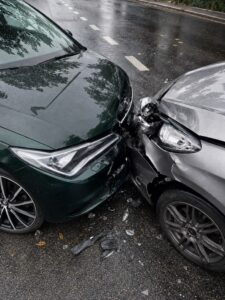
If debris hits your car on the freeway, hold the wheel steady, slow down without swerving, and get to the shoulder or an exit with your hazard lights on. Call 911 if anyone is hurt or the debris is still blocking lanes, then photograph the damage once you’re out of traffic.
During an El Niño storm, freeway debris is often branches, rocks, mud, and wind-blown signs rather than lost cargo. That changes who may be responsible.
Omega Law Group Accident & Injury Attorneys represents people hurt in storm-related crashes, and a car accident lawyer in West Hollywood on our team can review how your debris strike happened.
What Should You Do the Moment Debris Hits Your Car?
The moment debris hits your car, keep both hands on the wheel and ease off the gas rather than jerking the car into another lane. Swerving is often what turns a dent into a crash. Nearly 37% of deaths in debris-related crashes involved a driver swerving to avoid an object, according to the AAA Foundation for Traffic Safety.
Once you have control, follow these steps:
- Turn on your hazard lights and move to the right shoulder or the next exit
- Stay buckled in the car if traffic is close and you’re stopped on the shoulder
- Call 911 if anyone is hurt or debris is still blocking a lane
- Stay out of the travel lanes, even to retrieve a part of your car
A cracked windshield, flat tire, or leaking fluid can make the car unsafe to drive. Call for a tow rather than limping along the shoulder in heavy rain.
Why Is Storm Debris a Bigger Freeway Hazard This Winter?
Storm debris is a bigger freeway hazard this winter because officials expect El Niño to bring heavy rain, strong winds, landslides, and debris flows across California.
On September 21, 2026, Governor Gavin Newsom declared a statewide state of emergency and directed Caltrans to stage road-closure and traffic-control equipment along high-risk highways.
Freeways carry the greatest share of the danger. Debris-related crashes were about four times as likely as other crashes to happen on interstate highways, according to the AAA Foundation’s study of 2011 to 2014 crash data.
Wind can drop tree limbs and palm fronds across the I-10 Santa Monica Freeway or the 101, and rain can wash rocks down cut slopes onto lanes below. At 65 mph, a driver has little time to react to an object that wasn’t there a minute earlier.
Does the Move Over Law Protect You After a Debris Strike?
The move over law protects you after a debris strike once you stop on the shoulder with your hazard lights flashing. Under Cal. Veh. Code § 21809, drivers approaching any stationary vehicle showing hazard lights must change lanes away from it when safe, or slow to a safe speed.
That rule matters if a second driver hits you while you’re disabled. A driver who stayed in the next lane at full speed in the rain may have broken § 21809, which can help prove fault for your injuries.
The law also covers Caltrans maintenance trucks and tow trucks with flashing amber lights. Expect more of both on the shoulder this season as crews clear storm debris.
Who Is Responsible When Storm Debris Hits Your Car?
Responsibility when storm debris hits your car depends on whether someone’s carelessness put the debris there or kept it there. A branch torn off by a sudden gust may be no one’s fault, leaving your own insurance to cover the damage.
Other cases point to a responsible party. A property owner who ignored a dead tree leaning over the freeway may be liable under the general duty of care in Cal. Civ. Code § 1714. A truck hauling storm cleanup debris without securing its load may also be at fault.
Caltrans may be liable for a dangerous condition on a state highway it knew about and failed to clear or warn drivers about, under Cal. Gov. Code § 835. Omega Law Group checks how long the debris sat in the lane and whether earlier 911 calls or crash reports flagged it.
How Do You File a Claim Against Caltrans for Debris Damage?
You file a claim against Caltrans for debris damage of $12,500 or less with the Caltrans District Claims Office for the county where it happened. Claims over $12,500 go to the Government Claims Program at the Department of General Services.
A claim for personal injury or property damage generally must be presented within six months under Cal. Gov. Code § 911.2. Gather these before you file:
- The date, time, freeway, direction, and nearest exit or call box
- Photos of the debris, the lane, and the damage to your car
- The CHP incident or report number
- Repair estimates, towing receipts, and medical bills
Caltrans charges no filing fee for claims of $12,500 or less. If your injuries push the claim higher, Omega Law Group can prepare the larger claim and track the deadline for a lawsuit if the state rejects it.
Have you been involved
in an accident?
 (310) 526-8383
Will Insurance Pay for Storm Debris Damage to Your Car?
Insurance will generally pay for storm debris damage to your car if you carry the right coverage. Debris that falls or blows onto your car usually falls under other-than-collision coverage, while running over debris already in the lane is often treated as a collision.
Windshield damage may have its own rules. Ask your insurer whether your policy includes separate glass coverage or a lower glass deductible.
Your insurer may pay you first and then pursue a responsible property owner or agency to recover its payment. Your injuries are a separate matter, and Omega Law Group handles those claims while the property damage claim moves forward.
Freeway Debris Accident FAQs
These answers cover a few more questions about debris strikes on the freeway.
What if You Hit Debris and Then Another Car Hits You?
If you hit debris and then another car hits you, the second driver may be at fault for that impact, because drivers must leave enough room to stop under Cal. Veh. Code § 21703. A debris strike that slows you down doesn’t excuse a driver who was following too closely.
Should You Report Debris You See but Don’t Hit?
You should report debris you see but don’t hit by calling 911 once you can do so safely, or having a passenger call. A quick report helps the CHP and Caltrans clear the lane, and a record of earlier calls can matter if the debris later causes a crash.
Can You Recover Lost Wages After a Debris Injury?
You can recover lost wages after a debris injury if another party is legally responsible for the debris or the crash that followed. The lawyers at Omega Law Group document missed work alongside medical bills and vehicle damage.
Talk to Omega Law Group After Debris Hits Your Car
Knowing what to do if debris hits your car on the freeway can keep a frightening moment from turning into a worse crash. If El Niño storm debris or another driver’s reaction to it left you injured, Omega Law Group can find out who should pay and pursue the compensation your case supports.
Contact Omega Law Group for a free consultation. We take calls 24/7, help in Spanish, can come to you, and you pay no attorney’s fees unless we recover compensation for you.
