


The evidence you need for a slip and fall case generally includes photos or videos of the hazard, witness statements, incident reports, and records documenting your injuries and financial losses. Together, these materials help explain what caused your fall, who may be responsible, and how the injury affected you.
At Omega Law Group Accident & Injury Attorneys, we can help you understand what evidence matters for a slip and fall injury claim. Since opening in 2016, we have focused on providing injured clients with personalized legal representation.
To learn more, talk to a West Hollywood slip and fall lawyer and schedule a free consultation.
What Must Your Evidence Show to Support a Slip and Fall Claim?
Your evidence must generally establish that an unsafe condition and the responsible party’s failure to use reasonable care caused your injuries. This involves proving duty, breach, causation, and damages.
The requirements depend on the law and your circumstances. Evidence that the responsible party created, knew about, or should have discovered the hazard may support your claim. You must also connect the fall to your injuries and losses.
Responsibility in a premises liability claim may rest with an owner, tenant, manager, or another party that controlled the area. Identifying who maintained the property can be just as important as documenting the hazard itself. Lease agreements and maintenance contracts may help clarify which parties were responsible for inspections, cleaning, or repairs.
Which Photos and Videos Should You Preserve?
Photos and videos can show the condition of the property before anyone cleans, repairs, or changes the area. If you can document the accident scene safely, capture both close-up details and wider views that establish where the fall happened.
Consider the following:
- Photograph the substance, damaged flooring, uneven surface, or other condition you believe caused your fall, such as a wet floor, loose carpeting, or debris.
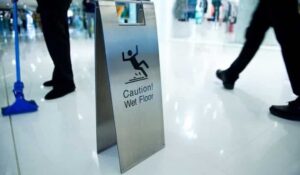
- Capture surrounding lighting, handrails, warning signs, and anything blocking your view of the hazard, including whether a wet floor sign or barrier was present.
- Take wider photos showing the walkway, entrances, and the hazard’s location.
- Photograph visible injuries and any damage to your clothing, footwear, or personal belongings.
- Preserve original image and video files, including any available date and time information, or metadata.
Nearby security cameras may have captured the fall or how long the hazard existed. When you contact Omega Law Group, mention any cameras you noticed and the approximate time of your accident so we can help identify potential footage. Because recordings may be overwritten, preserving them promptly is important.
How Can an Incident Report and Witness Statements Help?
Incident reports and witness statements can help document when and where you fell, what you reported, and what others observed. Notify the property representative promptly, request a copy, and record the hazard’s location and anyone you spoke with. Stick to facts and avoid guessing about details you cannot remember.
Witnesses may have seen the fall, noticed the hazard beforehand, or heard an employee acknowledge the problem. If possible, collect their names and contact information so your lawyer can follow up. Eyewitness accounts are most useful when they describe what the person actually saw or heard rather than assumptions about who was at fault.
A report or witness statement does not automatically establish liability. However, accounts that align with photos, records, and other evidence can help clarify disputed facts about the fall.
What Can Show That the Property Owner Knew About the Hazard?
Evidence of notice helps establish whether the responsible party knew or should have known about the dangerous condition. A prior complaint may show actual notice, or actual knowledge, while other evidence may support constructive notice: an argument that a reasonable inspection should have revealed the problem.
Relevant evidence may include inspection logs, cleaning schedules, maintenance requests, employee communications, and earlier complaints. Videos and witness accounts may show how long the hazard existed and whether it could have been addressed. A qualified professional may also assess unsafe flooring, lighting, or maintenance practices.
These records are often controlled by the property owner or business. At Omega Law Group, we can help identify relevant materials, request that they be preserved, and pursue available legal procedures to obtain them, such as discovery if a lawsuit is filed. A preservation request does not ensure access to every record.
What Should You Do if Some Evidence Is Missing?
If some evidence is missing, preserve the records you still have and identify other sources that may support your claim. These may include security footage, maintenance records, medical records, or communications with the property manager.
Keep what you already have in its original form, including messages with the business or insurance company. Do not edit original photographs or discard footwear and clothing that may be relevant physical evidence. When discussing your claim with us at Omega Law Group, explain which materials are missing and identify any uncertainty in your recollection.
Act promptly to preserve slip and fall evidence because it can disappear before the deadline for filing a claim. Filing deadlines, including the applicable statute of limitations, and notice requirements vary, and claims involving public property may have special rules. Gathering evidence does not extend those deadlines.
Have you been involved
in an accident?
 (310) 526-8383
Learn How You Can Prove a Slip and Fall Accident
With more than 20 attorneys, Omega Law Group can provide legal support tailored to each client’s circumstances. We are available 24/7 to take calls from prospective clients.
We can review what types of evidence can help prove your slip and fall case, explain potential gaps in the documentation, and help identify what may still need to be obtained. You do not have to organize a complete case before reaching out.
Bring the photos, reports, medical records, and correspondence available to you, and contact our team about the next steps for protecting your potential claim.
